About this episode
Most people have no idea where their donated clothes actually go. A t-shirt dropped in a donation bin in London can travel thousands of miles, get sorted by hand in a warehouse in Karachi or Dubai, and end up on a rack in a vintage store in New York, if it's lucky. The system moving billions of garments a year is enormous, and almost entirely offline.
Sanket Agarwal spent his early career at Google before cofounding Fleek, the company building the AI infrastructure behind the global secondhand clothing trade. Fleek runs a B2B marketplace connecting used-clothing wholesalers and graders with vintage stores and resellers, and its vision-language model, Fleek Sort, can identify, grade and price a used garment from a single photo.
Fleek closed a $25M Series B led by Burda, with eBay, FJ Labs, Andreessen Horowitz and Y Combinator backing it, bringing total funding to $45M. It connects more than 2,000 suppliers with over 50,000 buyers across 100-plus countries.
What they get into
- What actually happens to a piece of clothing after you donate it
- Why grading and sorting, not the marketplace, may be the real thing worth owning
- How you teach an AI to grade used clothing the way a human expert does
- Whether better technology fixes the waste problem in secondhand fashion or just makes it more efficient
- Why he left Google-scale engineering to rebuild a fragmented, offline industry
For anyone who cares about AI, marketplaces, sustainability, or the hidden supply chains that move the physical world.
The passenger
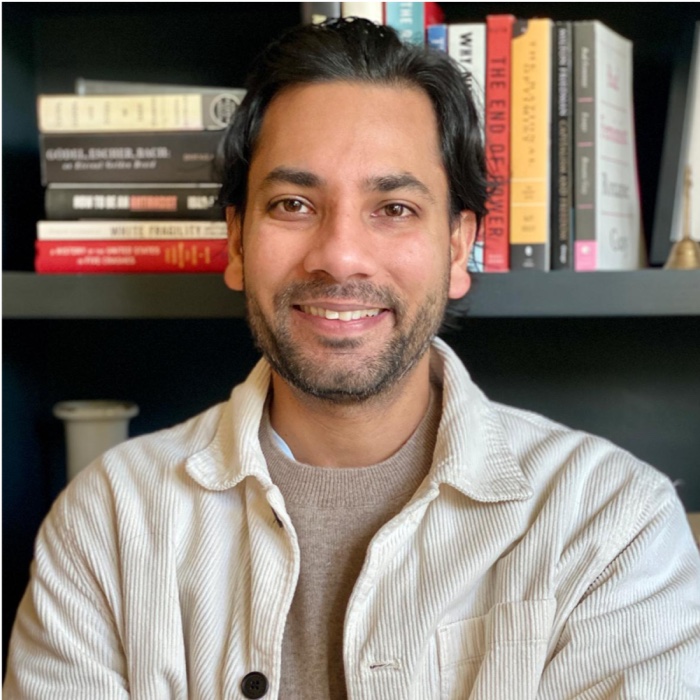
Sanket Agarwal
Cofounder · Fleek (YC W22)
About Fleek
The AI infrastructure powering the global secondhand clothing trade — a B2B marketplace plus a vision model that grades and prices used garments from a photo.
The insights
A donated t-shirt crosses continents by hand. Fleek is teaching AI to grade it. The write-up pulls out the big idea, the numbers, the counterargument and what it means for the autonomous future.
Transcript
Auto-generated from the episode audio and lightly cleaned up, so expect the odd misheard word. Each timestamp opens that moment on YouTube.
Read the full transcript 11,789 words
0:00 Welcome to the Tesla Pod, Sanket. It's great to have you on board. I'm super excited. What a fun idea and I'm glad to have a chat with you. Absolutely. Right. And then congratulations on the 25 million series B that you just raised, right? and the vision I mean I've been having I mean I've not been doing this for a long time, right? But then the during that short time mostly the people that we get around here the founders that we get around here, right? like you know kind of like you know AI native founders most right and then you're in a very different space right and I had to put a quite a lot of research into understanding this space as is as well right I mean in fact I went to goodwill and then got this t-shirt also right to actually get into like you know understanding what your space is all about right amazing so now I mean what you're doing is basically I mean first of all why don't you give a 30 seconds pitch of what fleek is.
0:59 Yes. Yes. So if you see what is happening in the world right now there is a stat which is quite astounding. One out of every two consumers is now preferring to wear secondhand. And if you look at the more younger generation the Gen Z 80% of Gen Z prefer wearing secondhand and buying secondhand to buying firstand and it's important to understand why that is the case. and why this industry is exploding. First of all, and I think this is probably true for most things in life, price is king, right? And with the rising cost, people are trying to find innovative ways of, you know, expressing their individuality but trying to spend less. And this secondhand has become a primary source of that expression because it's cheap. You can buy high quality goods. So great, it's available. Second thing is that this generation especially the younger generation they love the concept of wearing something that's unique to them and secondhand kind of yields into that very unique aspect.
2:02 Every item is unique even if you wear two jeans from the same brand. They will look different because they're secondhand they have that lens to it. And third which also is quite important is that there is a rising understanding of the impact of what clothing does when it comes to carbon emissions and the waste that is generates and creates and so people are more and more adopting secondhand to avoid that waste and this is quite a global phenomena. It's really big in Europe right now which is where we based out of right but and that's something that you mentioned before as well like compared to building this fully based out of US as per you know there is a bigger demand in Europe right so can you shed some light on that as well I would say that whenever it comes to u especially when it comes to environmentally impacted efforts I would say Europe usually is the first one to kind of lead the way and this just if I were to call out the epicenter of this movement It really started in London and that's where it kind of start and we are funny enough the vintage movement. Yeah, the vintage moment, the secondhand moment. around 2020 or maybe 2015, there is a company called Deepo that started like growing really well. And during pandemic, there was this massive u surge of people buying and selling on Depot because funny enough during pandemic people could not really go outside their houses and buy stuff. So they went
3:22 Online and they started trading their own clothes and that's how kind of blew up. And was based out of London. Now they've been acquired a couple of times, right? right now they just got acquired by eBay for I think a billion dollars plus or something like that. So that's the reason why it kind of started in London and started in Europe. Now of course you might have heard about this company called Vinted they just got valued for $10 billion recently and they are the biggest player in the secondhand place space right now and they are their biggest market is France. So you can see how London then France and in US as well you have some companies like you have Poshmark, you of course have eBay that are growing and scaling but I would say Europe by large is leading this movement. I don't think is US is very far behind. Right. It'll catch up very soon.
4:04 Right. Right. Right. So coming back to what click does. So what we do is u and I guess I told you about some of the other players in this market. What we wanted to do was we wanted to position ourselves quite differently. We did not want to be another B2C platform or a C2C platform. What we realized and this was our learning from talking to buyers and sellers in this industry. The biggest problem in secondhand is access to regular and high quality supply. If you think about secondhand, everything is unique. That means when you're ordering 100 pair of Levis's jeans, you're not going to get the exact same pair of Levis's jeans ever. So, how do you build an ecosystem? How do you build a marketplace that can service the needs of resellers or you know store owners who are sourcing inventory regularly? how do they go and find 100 jeans every month in a in a high quality fashion? That's what fleek is.
4:57 We are a B2B marketplace and we connect wholesalers and graders of secondhand clothing with resellers and retailers of secondhand clothing. And the most important thing is Sanket is that like know you are providing the technology layer for this right because I mean like the main thing what I understood was right so you build this vision model right that essentially understands and grades these secondhand items right so why don't you like you know tell us about that right so and that's what I think I believe the series B is mainly about as well right and why do you think that this is the biggest problem here, right? So, is that the toughest thing with regards of understanding how much value valuable this particular secondhand piece is? Is that what it's about? A good question and maybe what I could do is I can give you a very quick crash course in how secondhand clothing moves around the world. It will help you understand why technology is needed because the supply chain is quite manual and it's quite fascinating even for people who are listening to this. People don't realize what happens to the clothes when they donate it. So most people in the west when they're done with their clothing. They will donate it in one of few different ways. They will give it to a charity store. They will probably drop it in bins. A lot of times there's like city bins. Yeah. A lot of people also throw it in the garbage unfortunately that ends up in
6:17 Trash unfortunately. But this clothing that ends up in the what we call separately collected textile donation supply chain. What happens is and what has been happening recently is that with the amount of fast fashion being produced and with the amount of volume of it being produced and consumed, the supply chains are overwhelmed to the degree that people are not able to do the process of grading and sorting in the west anymore. M so it used to be a process that you used to run in like let's say in Texas or you know if you are in California or if you're in Europe like you know where whichever country your donations coming from and because of the overwhelming amount of volume coming in these operations have now moved overseas and they now moved overseas because labor is cheaper over there they've built that expertise right but what is the largest percentage of like say sourcing is it mainly through donations or are people actually selling the secondhand items as well. So today if you look at the secondhand industry 95% of that is through donations. I see right there is this budding economy of companies which are also decacorns now like vintage and depot which we call like C2C which is consumers selling themselves but by and large majority of
7:34 Donations still come from the donation supply chain and that's the same model that goodwill operates as well. Exactly. Exactly. Goodwill is Goodwill, Salvation Army, all these companies are like giant. They're like unicorns in their own aspects and they've been operating for like tens to like maybe like 50 60 years now. I mean my experience being right. So this pile of clothes was lying at our home, right? Which we wanted to always give to Goodwill, right? But yesterday like you know me and my wife we went and like you actually put it then only I went into the storefront, right? and then understood like you know kind of that front because mostly we've been just like you know given to the donations front right yeah and you know funny thing is like the amount of volume that's coming in so large that sometimes you have to you actually have to get appointments with goodwill just to give away the stuff that you so that's how big the problem is so you know this entire industry is now operating in this like labor arbitrage way you know operating in the east countries that you and me are from where you know labor is a little bit cheaper but the problem of this industry and this is something that there's a very famous report called the ThreadUp report and they do a report about secondhand every year and it calls out that secondhand is bound to grow to about 340 billion or 300 billion by 2030 and the biggest bottleneck is the supply in this
8:55 Industry is not organized because when everything is unique there are two problems one is you don't know where the value is actually captured so you know things are going into garbage which should all actually be you know put back in supply chain. these graders and sodas they don't know what's trending like think about like you know what's trending in US right now somebody grading and sorting in Pakistan they don't know what the latest fashion is and then on top of that this because this industry is still like there is still no you know if you think about buying new clothes you have SKUs in the secondhand industry there's literally infinite SKUs everything is completely unique so we had to come up with a technology that can solve these two major problems cataloging and understanding the value of the items that we are actually processing.
9:41 Previously before AI came around and this has been our I would say our AI turnaround story. We were doing it through literally handbooks we will give to our graders and solders which will literally be books laminated books if you can imagine that which will explain what the items are what the value of the items is so that they don't miss the value out but this is when you just started flake. Yes. This was like I would say until 2024 and then when AI came around and when you know I would say intelligence became quite more accessible we realized actually we can train an AI model to do this much more faster and effectively because you know you know we've always thought that we could build a vision model but the cost of building a vision model before you know LLM came around was probably like you know few million dollars now it has become few thousand because you can finetune a model you can have a couple of machine learning engineers you can go at it and so that is the basis of fleek sort that we can talk about as well. So before we dive into the vision model, right? So you had the initial playbook with this handbook, right? So if I am someone who's like you know who wants to know the price of say the le leather jacket that I have right what would this handbook be like you know having right for me to understand is it the like you know the what is the like you know what's what does it look like I would like you to imagine and I must you must have seen
10:59 This you think about a Pinterest mood board where there will be let's say in case of leather jacket there would be a mood board called leather jackets and maybe like two three different kind of mood boards. One for like a biker jacket, one for maybe you know suede jacket, so on so forth. And each of those mood boards will describe various aspects of clothing that you're supposed to look for it to be desirable. For instance, in case of leather jacket, let's say biker jackets. Biker jackets have a very particular way the zips go on the side. So that's how you identify a biker jacket. You will also in the same moodboard see some of the labels and tags. Labels and tags will tell you how old the item is. M so the older the item is the higher the value is and there will be a sort of a formula which says if you see all the characteristics price it for $50 but if you see some of them maybe price for $20 and if you think that it's still a leather jacket but might not be real leather maybe price it for $5. So it was, if I'm being very honest, quite vague because if you think about it, like who has the time? I mean, if we wanted to, we could build a playbook which is 1,000 pages long. Yeah. But who is going to go through that, right? And how is a human supposed to remember it? And so if you think about it, like the vision model solves the exact same problem. Now what has happened is those people don't or people who are grading and sorting don't have to apply
12:15 That level of like discretion themselves anymore. They show it to the AI model. The AI model tells them exactly where the where to keep the item and what the price of the item is and also lists on the platform. And I think the third part is important as well is like listing and cataloging is a massive challenge in the secondhand industry. Some of our graders are grading a million items a day. Right. Can you imagine listing a million items a day? It's quite crazy. Right. Right. Right. And so now say that I am someone who is sourcing these secondhand like you know clothes right and as a sourcing agent for fleek right so how does the process look like for me right so you have the app as well that the fleek sort app is there so I would process my like you know pile of clothes I mean these are I mean you're talking huge number of items right which because I mean from but I understood the supply is way more than the demand from what it looks like. Is that right to say? It's a good point. So just to understand your question, you are talking about when you think about sourcing, you're thinking about somebody who's selling on the platform or buying on the platform.
13:25 I'm talking with someone who's selling on the platform. I'm talking from like you know from the side of like you know someone who's providing makes a lot of sense. So let me describe to you what a typical vendor looks like and then I can describe to you what the processes look like. So these vendors and let's imagine this it's a warehouse it's a it's a business it's processing secondhand clothes they're getting donations in bulk from let's say US now these donations are coming in containers so they're opening up the containers each container will have about let's say 100,000 pieces of clothing let's just assume now yeah that's the volume and scale we're talking about so I would like to funny enough I was talking to somebody recently and they have a fashion business as well and we were talking about yeah so what's your volume like and this lady She told me, "Hey, I we do about like I don't know 20,000 pieces a month." And she was like, "What is your volume like?" I was like, "We maybe do a 100 tons a month." And just a different way of thinking. We're like, "We think kilos." And while most of the industry might think pieces, but these vendors who are working with us now, what their processes previously would look like is literally open these pieces up like you said, a pile of clothes and then an army of people processing these clothes trying to put them in the right bin. M it's a large you know sorting problem and now with what we have built with
14:42 Fleek sword and the technology we have built what they can do is they can simply take a photo they can also take a video of the so if you take a photo you have to take a photo of individual items I see right that could be that is also timeconuming by the way right and which is also very cool and this is something that we've launched recently now instead of taking a photo you can take a video of the items so what you could do is you can literally just keep moving on the items like keep showing it to the camera or have it on the floor and keep showing it. And what our AI model now does is it's able to detect the items from the video, catalog them and put them online. And not only does it do that, it also tells you what's valuable, what's not valuable, so on so forth. But yes, these factories that we work with, for them, the biggest thing and the most important thing is volume and speed. It's not just all about the cost. Right. Right. Right. Right. I see. So you provide the this AI layer, right? And then I mean now shifting gears a bit sankit, right? So I mean the story goes right with regards of how you and Abby met, right? And then how you all start flake, right? And then now it's like you know it's almost at a scale up level, right? So now like the story goes like you know where in the like you know where Abi has
16:01 Met an a vintage store owner right in Brick Lane in London right which I searched on Brick Lane like I mean it's quite a nice area that has quite a lot of vintage stores as well right I'm not too familiar with London right but I checked out right it's a very nice area so who actually got scammed for $15,000 right trying to source like a good like an amount of vintage clothes, right? And then from there you also faced the same I mean you also understood the same side of the problem from your mother-in-law from your mother-in-law I believe right and then I mean who struggled to sit and that's why you both of you all kind of connected the dots and like you know understood there is something big that you could solve here right h what is this I mean it's quite a quite a crazy story pretty crazy story right why don't you woke talk us through this amazing story. You know it's it in hindsight when you put the story together like that it seems so obvious. Of course you had the issue and of course you so me and Abby we have known each other for quite some time and we even before we started fleek we were trying a few different ideas and we had some failures as well along the way. One of the things that I was doing during that time and I was
17:20 Trying some ideas and this was right after I used to work at Postmates. postman got acquired by Uber and while the acquisition happening I realized I had to do something of my own and what I started doing was I started helping my mother-in-law who is also in San Francisco right now she lives in Florida otherwise right I was helping her with her own online business because I just wanted to like try something new and just help her out and what I realized was she had a really well and good thriving business on Poshmark and eBay and she was selling secondhand a physical store got a virtual store right online store all online which is a lot of the secondand industry right now it's online on like various marketplaces and she by the way she has been doing this for few decades so she's an OG and she was telling me this thing which really struck with me is she said that in the recent few years she has seen a massive uptake in the sales she's getting but she's not able to say source enough clothing and she's not able to source enough of what her clients are looking for same time Abby and me are exploring ideas and he said Like S I've been to Bricklane and I talked to a few store owners over there and they're all saying that they have the most number of customers they've seen in like forever right but it's really hard to source inventory and literally the way they're sourcing inventory and this is kind of crazy is
18:37 They would go to these warehouses that we now work with in person travel physically to source clothing and during co the challenge was that nobody was able to travel so their sourcing kind of got restricted and the demand was surging because of what was doing and what vintage was during that time and that's usually a recipe for you know shady things to happen in the industry right because when you have so much demand and supply is limited then of course the supply side is trying to like you know meet the demand but things like scams happen because if I'm desperate and if I have customers lining out of my door and I want $10,000 worth of inventory and I know I can sell it tomorrow I will take a risk I will give the money to somebody that I think can provide me what I'm looking for and that's what we saw was in this industry it was kind of and you know me and Abby talks still talk about it like we entered an industry of cowboys where no you know there's no law there is there's no rules it's kind of like all unstructured and usually these industries live on WhatsApp and Instagram so when we talked to these store owners who were sourcing inventory they said like hey man I just spent like $5,000 can you help me with this because this this person that I talked to in whichever country is not responding to me anymore so we realized there's a big opportunity where there's a lot of demand there's a lot of supply like you talked the connecting tissue is missing the
19:54 Layer of trust which is the basis of most marketplaces is completely missing and of course as entrepreneurs when you see when you see challenges you see opportunity yeah I mean this is this comes to my previous point that I told as right whereas I told I mean the supply could be higher than demand that's not the story as well right from what it sounds like the demand is there and the supply is obviously there as well but then it's actually a connecting problem Exactly. Even from a from our suppliers perspective, a lot of times they I mean this is my another fun story that I could share with you. One of our suppliers, he said, "I have and you know, he speaks so I'll do it in English over here, but he said, I have these items and they have like this horseshoe logo on it and I want to get rid of these items. They're horseshoe logo items." And I was like, "Horso logo? Like what exactly do you have?" Turns out this the supplier somebody had told him to separate his items and that somebody who told him like then did not buy from him. He was sitting on about 10,000 pieces of Lululemon leggings. Now you know so I told him this stuff that you think is worthless. I can get you $100,000 for it in the next one week. And he said there is no way you can get me $100,000.
21:10 I will sell it to you for $20,000. And eventually we ended up getting him the money that he deserved. Right. It's a great example of there's demand, there is supply, there's lack of education, and there's lack of that real that they're missing. And do you also see an element right with regards of I mean from a speaking shifting gears on the demand side of things, right? Where people I mean not everyone's really into it, right? So, but when you get into it, right, you really like it, right? So I mean h how do you see the demand the education side of it right? I mean and there's like you know people who really love it as well right so c can you like you know give some ideas on like you know what's happening on that particular front how are people how do people fall in love with secondhand clothes right how do people fall in love with vintage clothing right what's that side all about you know we're sitting in a Tesla and I used to tell the story about Tesla when people used to ask me this question so it's very opportune to take that story and give the story here as I think whenever new fashion trends or just any kind of new trends start like if you think about Airbnb nobody thought that people will go live inside somebody
22:28 Else's house and nobody thought that they will let their houses be or on Airbnb like a stranger scary same with Uber you know same with like you know everything else but there's of course like you know you have the first few users they start the process and then they kick off the process what I fundamentally believe is, and I think Tesla is a great example of this as well, is I think people love Teslas because they're cool, sexy cars and they're sustainable. Tesla made electric cars, self-driving cars, sustainable cars very accessible in the market. They made them cheap. They made them accessible. They made them just like fun. And I think that was the trick to like why now, you know, you drive around San Francisco and every 10% has a Tesla. We believe that the early signs and when I say early science it's already like few hundred billions of dollars and it's just a starting for the secondhand industry is there the traction is there people are excited about it now if you have to get it to the masses if you have to get it in the hands of every second third person in the world then we have to make it very accessible it should be as easy to go buy secondhand as it is to buy firstand think about if you want to buy a jacket today you can walk down on Market Street, you can walk into a Northace store, you can walk into Arctic
23:44 Store, you can go to Uniqlo and you can buy a very nice puffer jacket for the winters in San Francisco. Think about buying a secondhand puffer jacket. You have to go to market places. You have to trust those marketplaces will give you what you're looking for and even then like you might not get the quality you're looking for. So I think with secondhand the way we think about mass adoption is make the accessibility mass. And if you make the accessibility mass, if it's as easy for people to buy highquality secondhand clothes at affordable price as firstand clothes, why would you not, right? So that's what I think is going to happen is like companies like Fleek and vintage and depot and eBay and Poshmark which are combined now like $50 billion of value right there. They're going to expand a lot more because the new clothing industry is like few trillions of dollars. Crazy. So there's a lot of opportunity for every business in this world, right? And that's why I mean you raised the series B. I mean initially you went through YC and now you have A16C, YC, eBay, all of them on the cap table, right? So what is that like you know when you were initially kind of discussing this idea and then like you know I mean when you came out of the idea phase and then trying to get this out there what is there like kind of a single unlock right that really helped you to become a company that's like you
25:04 Know raised over 45 million now so I guess your question is more about how did we go about fundraising and what was that story behind the fundraising. Yeah. Yeah. you know when we first started and YC is kind of special that way. YC's thesis is they invest in great people and I guess they saw something in us that they invested in us. I think post that our investors have had there's actually a very good reason of why a16z got in and after that a couple of the European investors HB Capital Bura and then eBay as well right they have a story with I would say the secondhand supply chain so if I start with A6NZ our partner over there Connie Chang who invested in us initially she was also the lead partner for whatnot so she invested very early in whatnot and her thesis was that with video streaming and secondhand going live mainstream it's going to be a big industry. So she came in because she believed in the industry. She believed in the way we were building the marketplace and she's a she's a marketplace expert in the what we saw was the sequence of investor that came after that in series and series B series A we got the folks who led the series A of Deepop.
26:17 So Deepop which is now or was a $2 billion company HV capital came in. Then series B that we raised recently we had Ba Capital who invested in the series C round of Minted. M and then of course you got eBay as a strategic and as you all know like eBay is very big on you know secondhand and just resale in general. So what the thesis that we've had which is and our mission at Fleek is to make secondhand the first choice is something that we really share with all the investors that have gotten into it as well. They truly believe that secondhand is going to be the future of this world. I mean look at even like cars. I mean I have bought maybe four or five cars and I didn't even think about it but every time I bought a car it was a secondhand car why not it was high quality it's like you know it's verified why don't I buy it so in clothing and secondhand clothing I think that I would say organization of supply chain has not happened yet and all these investors know that and what they see fake as is they see fleek as that infrastructure layer a lot of people are trying to do like selling to customers nobody's thinking about how do we fix the underlying infrastructure of industry. How to fix the grading and sorting? Like 2.4 billion items a year are being discarded in the secondhand supply chain today and it's growing to massive.4 billion
27:37 Items are being discarded into the secondhand clothing supply chain a year. It's bonkers, right? It's quite nuts. So that is the stuff that we give to this donation bins, they could be ended up being discarded as well. When I say discarded, I meant they're going in the second end supply chain, right? And then a lot of them, well, it's a good point about what gets into trash or not, but I would say that almost everything goes into secondand supply chain gets and ends up getting used by somebody, but the value being extracted is not there. So out of the 2.4 billion items, maybe a lot of them are being cut up and being used for viper acts, right? Maybe it's a nice white t-shirt that can be used by somebody in US. So out of the 2.4 billion items. How much can we put back into circulation is the real question. Right. Right. So now you have two sides of the market, right? That is like you know where you source from wholesalers and graders, right? In India, Pakistan, Dubai, right? So and like the other side is like these vintage stores in US and Europe, right? so which side is it hard to build and why? It's a it's a very good question and if there are like early marketplace founders who are trying to start up a marketplace as well when you initially start a marketplace
28:57 And I think marketplaces are really hard businesses to start because you have to bootstrap both side of the marketplace at the same time. It could feel that both sides are equally hard to build you know both demand and supply. Although what we have realized over time and I think we realized this one year in a marketplace the site that matters the most is the supply side. If you can get good high quality supply and if it's unique and if it's you know it's desirable it sells pretty fast and I think we at fleek as well it's not like we don't have to work on our demand side as much but a supply side is a lot more complex. Our supply side is also a lot more unique. A supply side is also something where you spend most the time of I would say we spend most of our waking hours figuring out supply. We spend most of our waking hours talking to our suppliers as well. We also talk to our buyers but yes as a company we obsess about supply quite a lot because if you like if you think about like our you know this is how the company planning goes. Let's say we have to hit the targets for the year. The first question we ask is not are we going to be able to get enough demand. The first question we do is do we have enough supply to be able to service this demand. And this slight twist matters a lot. We read about this when we were reading about like Airbnb as well there as well. They were talking about one of the key primary metric that Airbnb used
30:13 To obsess over was number of bookable nights available. Right. So how many nights are available to be booked on the platform and can we match it then? which is which can be over often overlooked. Right. Right. Right. And how do you go about the trust piece sit? Right. Because trust has to be everything here, right? So because I mean these are this goes to the same thing like you know at Brick Lane, right? So that store owner like you know they got scammed, right? And then now how do you ensure that when you're when someone like say I'm a vintage store owner, right? So and I want to sign up with Fleek, right? And I want to make sure that like you know I get proper quality clothing from Fleek, right? How do you go about the trust side of things? How do you build the trust in me as a vintage store owner? It's a very good question. So we have something which you call which is a comprehensive buyer protection which essentially means that if you're buying anything on fleek we are guaranteeing you a few different things. First is your money is protected with us and we will ensure that all the items are per the quality standards that we've defined. Second hand does have variability. Not everything is pristine.
31:27 Something can have like you know some wear and tear so on so forth so we've defined that very clearly in our in our DNC's but as long as you're buying in those constraints we will make sure that your items and your money is secure with us if there's any issue then we make sure that we make it right we'll refund you the money in most cases the people that we deal with they're not just happy with refunding of the money because they are businesses what they want is they want inventory and stock so often times when we tell our buyer saying hey we'll refund you the entire money they're keep the money, deliver the right stock to me, which is you know which testament to the fact that this industry is so supply constraint. and I think to ensure that and this is this is actually one of the key things when we started fleek we got scammed. So it's not like we were you know we were just like we knew everything what we were doing we realized that unless we had some physical presence in these countries that we're dealing with we will not be able to you know maintain the quality. So what we did was and what we still have today and it's one of the biggest value proposition we have at Fleek, we have a quality check center in each of the countries that we operate in from a supply perspective. So all the items that are being shipped from Fleek, we first send them to the quality check center in those countries that these things are originating from if we like those items or if sorry if we don't like
32:43 Those items they're not to the spec, then we will pause and hold them and make sure the buyer is okay with what we're delivering. And there's a whole process on dispute resolution. And you can think about like kind of like PayPal dispute resolution where it happens at the source of the items. If we think nothing is bad with them, we just ship them. And that has been the single biggest reason why shop owners will like often trust us because they're like, "Hey, even if I'm buying from my own regular supplier, I would like fleek to do the transaction because I won't qual that's how messy this industry is." And then on top of that as well like you know it's not just about you know QC is one of the biggest value proposition. We also provide financing to our buyers which is really big. Our buyers are business people. They often have cash flow requirements. So we provide what we call 45 days net terms. You buy something now, you pay 45 days later.
33:32 That's a big value proposition as well. and on the logistics side, we also ensure seamless logistics. So not only do we ensure quality, we make sure the items are arriving like hassle-free. We take care of all customs, clearance, so on so forth on behalf of our buyers and sellers so that they don't feel the pinch of like dealing with international shipment which especially in the world right now where like tariffs and rules are changing every freaking day right you know sometimes we had to deal with things like okay tariffs increase and fleek ate the cost meanwhile because we had promised our buyers that we'll provide the service at this cost so I think that's why buyers tend to like come back to us right that's awesome sake So shifting gears to the broader mission right that you're really driving towards to right so the numbers go as you have kept more than 12 million items in circulation is that right yes and saving billions of water right and tens of thousands of tons of carbon dioxide right so the question is right is fleek a sustainability company that happens to be a marketplace or a marketplace that happens to be good for the planet.
34:46 It's a it's a it's a very good question and it could come off as a hot take as well. When we started Fleek, we started this business because me and Abby truly believe that a there is a massive need. Well, first of all, with the amount of overconumption that's happening in the world, the only way to fix that over consumption is by changing the supply chain and making sure secondhand is a lot more accessible. So, we truly do believe that Fleek is built for the better of the world. It's built as a sustainability company. But what we do also believe very strongly in is that just being a sustainability company does not really, you know, cut it. We live in a capitalistic world. Unless you can create value, unless you can create revenue, you are not going to be able to survive as a business. Right? So I think it's in equal parts both a marketplace and a sustainability company. But we always remember that unless there is revenue, there is no sustainability. But also when we are taking on any challenges, we make sure they're aligned with the mission of the company. So for instance, like I give you an example of it, we have recently expanded into a liquidation inventory. Essentially, it's stock that brands or you know, manufacturers are
36:03 Not able to sell in the first go. So, let's imagine the scenario. You go to a Rebok store, you buy a pair of Reebok shoes, but there's a lot of Rebok shoes that get unsold. I mean, there's end of season clearance, so on so forth. And there was a big debate in the company, should we be dealing with this inventory, which is technically brand new? And what me and Abby told the company is that it is still in the service of the mission. these items which yeah they are brand new if we don't take care of them they will end up in trash and we are here to make sure that we're not creating more waste in the world so I think it needs to be equal part sustainability and making sure we generating revenue and I go back to the example of Tesla as well I think Tesla is a sustainability company but unless they can figure out how to make the car cool and sexy correct I don't think the business exists so coming to that point s do you also take part in I mean for Because honestly telling right now know say buying secondhand clothes it's I mean I love I'd love to get into that track but it's not like you know really in our day-to-day practice as per se right. So do you do some sort of I don't know like an education or advocacy to turn people right I mean now why I went to the goodwill yesterday is because okay this conversation was happening
37:22 Right but then like I mean is there like an educative piece that you do to make sure that the demand side increases because that's where when your ultimate mission would become successful as well right very good question and what I would say is that one of the things that we've seen at Fleek and this has been quite encouraging for us and I'm very proud of this and we were talking to some somebody about this a while ago during a series A funding round where they mentioned and I'll go back to the education point in a second. They said that best marketplaces are the ones or best businesses are the ones who create their own customers and goes back to what you're saying which is you know how do you expand the market? How do you get this awareness so that more and more people adopt secondhand? And I think there is an element of we have to educate the end consu end customer and make sure adoption is happening over there. We at fleek what we have done and we have focused tried to focus on our marketplaces we have tried to create what we call more resellers. So these are people who are selling on places like vintage or depot or eBay and so on so forth and what we have seen which it's been incredibly heartening is in over the last 2 years majority of the people who are buying on the fleet platform are trying to resell for the first time in their lives. What that means is these are people who are excited about the opportunity in secondhand. They want to make some
38:43 Money. They don't know how to do it. So we have set up like things like starter packs. So we if you go to our our platform, our app, it'll say something like you know vintage starter pack which is buy this pack, go unwinted and sell it and you will have a lot of success. Same on the supply side. we work with in countries like Pakistan and India and so on so forth and the word of mouth is amazing over there sellers come to the come onto the platform we help them with what should you be sourcing to be able to sell on the platform and you should be sell sourcing more Llemon you should be selling sourcing more leather jacket so on so forth so you're absolutely right that education is a massive piece in being able to create more entrepreneurs which is what the business like which is what the mission of fleek is it's a B2B layer that we're building so we are working with entrepreneurs on both sides and that's why you're helping lot more people to get into vintage clothes selling I mean to start stores essentially speaking exactly to start more businesses and we believe there are other businesses like vintage and depot and eBay I think that they're doing their part by investing in fleek as well as you know being the businesses themselves where they're pushing the agenda with end consumer like my you know you just met my wife and kid for a few seconds everything that my kid wears is source on Winter Depot or eBay
40:01 Everything that I'm wearing today is secondhand and of course like you know we are we in the business so it makes sense but there's something good that those companies are doing as well so u funny enough actually living the living the vision right you got to live the vision it's funny we met the team at vinted a few a few months ago and we were trying to figure out some business deals with them and their first slide was the mission of vented make second on the first choice And we laughed because we told them it's exactly the same mission that fleek has. And what I realized in that moment and this is important is this industry is so big and this market is so big there is space for 100 different fleets and vintage. So if you work together I think we can not only make money and revenue we can change the world.
40:51 Yes. I mean that's awesome. that's awesome. Sanket. So I mean shifting gears to you and your co-founder right Abby right so I mean first of all like I'd love to understand about you right so you went to IIT Karagpur right and you are a computer scientist basically right and I mean on paper you technically can build anything right essentially and you're the CTO as well right so why fashion right use fashion specifically out of all the things you No, it's a good question and I would say in the world of AI I have been challenged quite a bit in terms of what is the best most effective way to create a change in the world and I love I love what I do at fleek the way we got into it and this is 2021 it's towards the tail end of co the biggest inspiration for me was my mother-in-law because that's how I kind of learned about this industry I worked with her I saw the big challenge was and I was very passionate about solving real world business problems. I think when AI came around, what I realized was that AI can actually change the way the entire world works. It can ch change every industry. It can change every business. And what me and Abby did was we sat down and we
42:09 Spent I think a few weeks if not months understanding how to essentially rebuild fleek in an AI native world. And I think if you look at like even our AI model fleek saw that we built was a byproduct of that. We had always wondered and imagined what it would look like to build something like that and we realized that okay now that AI is here we can do something like that. We also reimagined our team. We thought about what could an individual look like in this AI world. So I feel like AI kind of gave us a new energy and a new life almost and I think a lot of companies are going through this existential crisis of what to do with AI especially company like ours which is not necessarily I would say some we're not building like a AI tool itself but I almost feel like this intersection of the physical and the digital is somewhere where AI will have a massive impact in the next 10 20 years like look at the amount of funding going to robotics right now and that is what gets me excited is this intersection of moving physical guns at the same time digitizing the supply chain.
43:09 Right. And I would like to stick to that and see what I can do with it. Right. Right. And I mean you and you're the technical co-founder and then how do you split the world split the world between like you know with Abby right? which part like you know do you drive forward and then which part does he drive forward? It's a good question and I think the answer changes over time. I would say when we this is a I was or at least I remember this conversation very vividly where Abby was like singing when are we going to build a software and I said when we hit 100,000 in revenue and and he said what do you mean I said like look we are here until then you didn't have a software we were using Shopify shout out to Shopify we in fact Harley is one of our investors as well he's the president of Shopify right and the thing is like look technology is in service of being able to solve a business problem and that's what I've always fundamentally believed in. So as long as we using technology to solve a real problem grow revenue we're fine. So yeah until 100k we had no we had no product and after that even after that we did a few hacks around in the A native world I would imagine that we would not have needed like software developers until a million in revenue but I think you know of course like at some point you start to grow and scale. overall we split responsibilities as you would imagine. Abby takes care of most
44:27 Things around the commercial side of things. business side of things, business operations. I will look at things around technology and I also look at physical operations, logistics itself. So this is how we split responsibilities. Our roles now have changed quite a bit where we have a leadership team. So I don't think about my role I don't think about my role as you know I should do this that and the other. It should really be about find the biggest bottleneck in the company. Go attach yourself to it and go unblock it. One year ago it was AI enablement. So I became an IC. one year ago or two years ago it was our logistics were not scaling fast enough. So I was traveling all around Europe figuring out how to find the next logistics partner you know. So two years two years later I don't know what's going to be. So co-founder's role is find the next opportunity. That's how I think about my role. Absolutely love it. Sanket, so coming to hot takes, right? So what is the like you know is there a hottest take on the fashion or the retail industry that people inside do not really want to say out loud?
45:34 Yeah. And I'll steal my co-founder's words and I think he describes it really beautifully. Fast fashion and especially ultra fast fashion is quite a big problem for the world and there's no two ways about it. the rate like it's very hard to resist the temptation of buying something online for $5 and I think the world understands it but I don't think everybody wants to talk about it like we understand the kind of waste and carbon emissions it produces what we also believe is the only way to fix that is to fix consumption and the way to fix the way to fix the consumption is if somebody can go buy something online from a store in China for $5 you got to make sure that they can also buy something for $5 online that's secondhand sustainable So that's my hot take. It's very hard to fix production. I don't think it's going to get fixed. Only way you fix production is by fixing consumption. And if you look at it like European countries are taking quite vast measures against it. I think one of the I think it's France. I should probably check the country but one of the countries in Europe recently just banned destruction of inventory that's unsold. So the brands used to like you know destroy inventory because they don't want your their brand to get diluted. So they would just literally you know burn it sometimes right or just destroy it or you know throw it and now
46:54 EU is saying no longer can you do that you have to declare if you're doing it because we don't want you to create more waste. They also had something called EPR extended producer responsibility also coming to us soon where they are going to put tax on fast fashion. So the world is trying to put some kind of kibash on this consumption and I think it's going to happen next decade. Right. Right. What's the most overrated thing in AI right now and what's the most underrated? That's a that's a really tough question. I will talk about what's most underrated. I think there is a I think AI has done wonders to this industry. has done wonders to the way we operate and we execute how companies are built so on so forth. I believe that the next 20 to 50 years of AI are going to be significantly larger in terms of the impact they will create as compared to what we've seen in the last two to three years and I believe one of the areas that I am particularly quite excited about and now I would say that I'm seeing some money go into it as well is robotics. I believe that robotics and if you think about robotics is literally everything that humans do is going to the biggest time in the biggest market and we at fe as well we have a big use case for it if you think about all the sorting and grading that happens and do we really think that people want to do
48:17 That job day in day out no it's a it's an okay job it provides employment but we could put those people to a lot better and higher leverage tasks only if we could build robotics to be able to replace some of this truly mundane day-to-day jobs. So, I believe like my hot take on the underrated, which I think is now becoming more and more rated, is the intersection of physical and the digital is coming to life, right? It's coming to it's starting to come to life. I think it'll take some time, but when it does, it'll be it'll be a mega revolution compared to what we have what we've seen, right? Do you believe right? I mean when Jensen said that robotics right it's going to actually unlock a 50 trillion net new market right so do you think like you know that's actually going to be the utopia that we are going to see I mean like think about what we're doing right now we're sitting in a self-driving car having a podcast this mostly driving itself you have been attentive but mostly the car has been taking care of itself we are looking at a car in front of it us that is way Yeah, this is this is robotics and of course these companies have started a long time ago and they've built that you know muscle with AI and LMS and what they are
49:36 Able to do for robotics. It will become mass accessible. I wouldn't be surprised if people are going to be able to start their own self-driving car companies in their in their in their garage. Like I really hope it's all safe and sound but it's a very possible utopia we're looking forward to. If the number is going to be 50 trillion, 500 trillion, 5 trillion, it's to be seen. Yeah, it's going to be much bigger than what we're seeing right now. Right. I mean, it's a physical world. You walk around, you look at anything, house construction, serving in a restaurant. I mean, I'm just looking around us and I'm just thinking about like everything that's happening. Everything is up for up for for a change and disruption. Absolutely. I mean, this is where actually where our worlds meet as well, Sanket. Right. So you've trained fleek sort right it is on it's fully trained on real behavioral data right millions of actual transactions right because that's the only way that you can actually capture how re real humans right grade and price things right and at market tricks what we do is we simulate like you know these real users right and we understand and build personas around them and we enrich them right really based on like you know the conversations and real behavioral data so that we could get some sort of a
50:54 Sense of how they would predict right but then people like you know because I mean the main difference that we see is right so that how they say that they will behave is not the way that they actually behave as well right and that these are two different things right so do you find the same gap you know it's a very good question about like the way they say they will behave versus how they behave is a very good very argument to if you ask a customer you know would you like something they will say yeah of course I would like it if you build that in the in the product and you show it to them they might not like it and that's why you know the Silicon Valley is obsessed with AB test yeah they love they love the AB test and the multi-arm bandit test and stuff like that I think what you guys are building is quite powerful because the you know right now what has happened is building software has become very cheap there's no two ways about Scaling software is still hard but building software has become cheap and one of the biggest challenges of the days today now is how do you define and decide what to build and then not only that from there how do you test what is going to work I have seen in my like meetings with my product team saying it's going to take 4 days to build and 10 days to test it right
52:11 And so if you're somehow able to get that testing time down we somehow able to what you have been talking about simulations where like AI can almost simulate a user behavior and I would be you know keen to understand like if that's even possible because I mean if you look at in your case right you have two types of users right and they are significantly different from one another right because completely different one side is like you know someone who's like you know whom you're sourcing from in Pakistan right who's like you know day in day out like you know going through huge piles of these clothes. I mean tons of containers that's actually coming there, right? And I mean the workflow of that person versus right a vintage store owner in Europe or the US who's trying to order through fle these are two different personas all together right how do you like you know I mean h when you ship a change right to the product how do you like you know that this is actually suitable for these two different personas I mean look to be honest it is it's it's a hard problem and it's something that we u spend a lot of time and effort on. So you know how do we do it quite
53:27 Manual we have some WhatsApp group we have some discord groups we talk to our buyers we talk to our sellers we launch something we have a beta group of testers we give it out to them we see how they're are liking it then eventually you have brought analytics and then you understand you realize okay are they actually doing what they said they will they were going to be doing and I think all that combined gives us a good sense of what we should be building but do I think there is a much better way of deciding what to build do I think there is value in reducing and cutting down that time to test dude it will save us months and months worth of work. Yeah. If a company could predict what to build before they have to build it. I mean that's crazy. Yeah.
54:09 So that's the approach that we take as well sit with regards to how can we simulate these different types of people so that you are able to get that behavioral like you know data right into the engineering layer. So that like you know you could predict that does your software also or the way you do personas do they then become kind of virtual users of the software and you start to see what their what the behaviors are. I mean our tagline goes as a million users before your real users right so that's what I mean what we are what we are pushing towards so then when you push out a new change right or feature right before you do that right can you simulate your say I mean sourcing partner in Pakistan right and see how they would react beforehand right so that's the direction we are really driving towards sank it's also very powerful this is something that we've been trying out quite a bit right now is how do you automate testing and you know user testing has always been something that people talk about quite a bit. Yeah. If you're able to extend those user personas to be hey I have 100 users and they will simulate real world traffic. Yeah. You know usually when you think about testing you think about testing as we will have test cases. What do test cases cover? They cover various scenarios. What you really want to cover is the
55:28 Kind of traffic that's going to come next day. Yeah. And you want to understand if that traffic is going to hit some issues. So if you're able to simulate that it's almost more powerful than testing. Yeah. Yeah. That insight is very powerful sit. so I mean we are almost we spoke almost for an ass time now right. So I want to know right. So then now if there is someone out there like you know right now sitting with a huge pile of inventory right these like you know containers like multiple containers that they are getting right now not really think knowing how to sort them right or like you know running a small vintage stop shop right who has not really heard about fleek right now right what would you say to them I would say that if you are a shop owner or even if you're thinking about starting to sell online first of all I would say it's a great time to do it. This industry is growing faster than ever and there's an opportunity for everybody. So I would say get out there and start your business. I would also say if you are starting off start small and that's always very helpful and that's something that Fleek is very effective at is it can help set you up if you're trying to like start a business if you're a shop owner and if you're doing bulk sourcing of inventory which you probably are in some way or
56:45 Form. One thing that Fleek has also done really well is organize the supply chain so that you can source regularly and not have to worry about the logistics of it, the payments of it, the quality of it. So we are very well suited to service you. Some of our buyers are buying upwards of $100,000 worth of inventory a month. So they are running the shops and they have multiple millions of revenue millions of dollars of revenue a year. If you're a greater and sortter and I would love if some of the greatest assortters are listening to this podcast as well. I believe that there is a phase shift that has happened in the secondhand industry where previously what was considered essentially trash or was sold for you know the kilo of the kilo price of the items has real value to it now because of the adoption of secondhand and because of the u you know the removal of the stigma that secondhand is as good as new. I think graders and soders have the potential to extract a lot more value. U I have this example of when I was talking to a solder and they told me like this is what they do and I said like hey look if you reorganize your business a little bit just a little bit I can double your revenue. He said double my revenue. He's like doubling he's like that's crazy I have to like source twice as much inventory. I said, "No, I will change just a little bit about how you're
58:01 Greeting and sorting and some of these items like these 5% of the items that you might not think have a lot of value, I can get you 10x more value. So, if I can get you 10x more value, 5% of the items, I created 50% more revenue right there for you." And I think that really changed the way they thought about it and they change the way they initi thought about it. And that's the revolution we brought about in the secondand industry is there is a lot of value packed into these clothes. What you need is you need automation and you need software to be able to get the value out. And if you look at all the marketplaces out there, they're doing the same exact thing. They're opening the hood on, you know, donation supply chain and they're saying or you know, even in your own closet, like you take a photo and what you might be literally throwing in the garbage, you get $5 for it. That's cool. So yes, if you're starting a business either on grading and sorting side or more importantly on the buying side, I would say check out Fleek and start with a small bundle and see what happens. Right. That's awesome. Where do people find you and fleek? Joinfleek.com. Very easy to find us online. The app is where the action is at. The website kind of describes what the business is all about, how it works.
59:08 You can see a flavor of it. You should be able to find us. If you just search for fleek wholesale online, you'll find us as well. We are we are quite out there. Absolutely love the chatter sit. Thanks a lot. Thank you so much. Really fun. Yeah. Awesome.