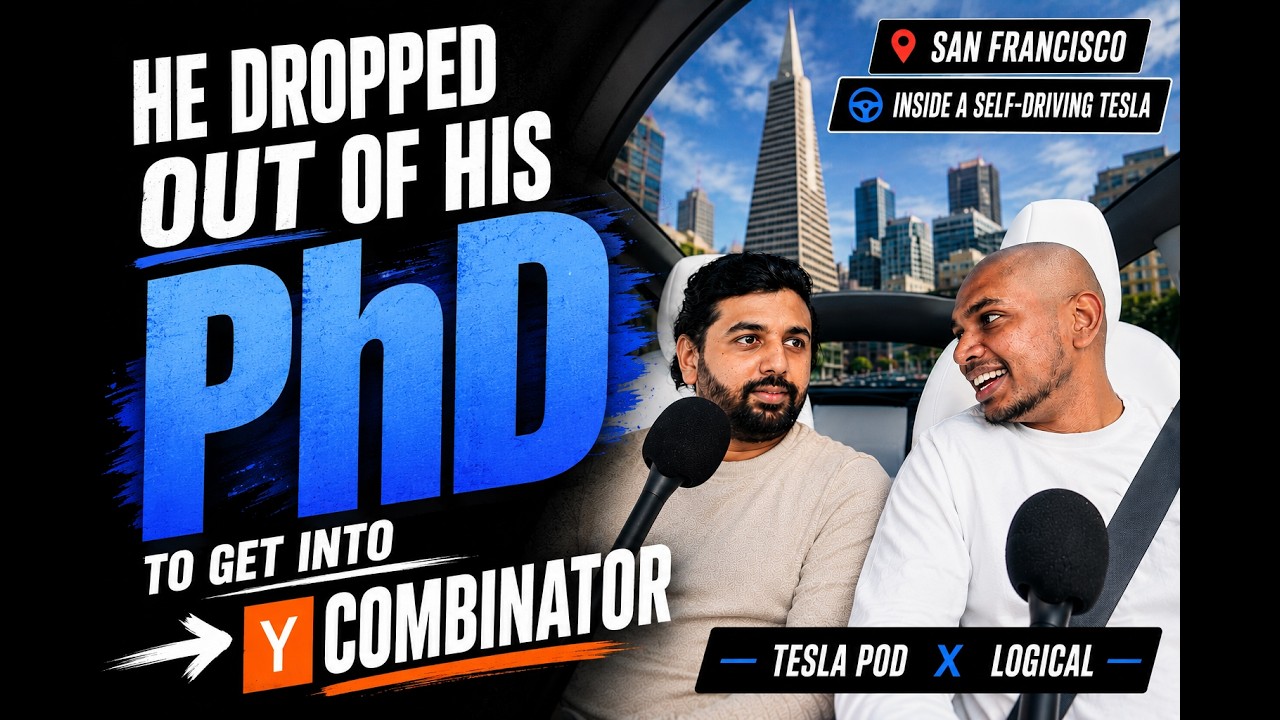
About this episode
Jason Jin spent six years at Google, where he was a founding engineer on Google Analytics Mobile and built a logs system processing over an exabyte of data per day. Then he left to start Funky.
Funky is infrastructure that lets developers spin up hundreds of AI agents in parallel without wrestling with the cost, scaling and reliability problems that usually break multi-agent systems. One API call, hundreds of sub-agents, each in its own sandbox. The ride ends with a live demo: a swarm of attacker agents trying to trick a guarded agent into wiring money out.
What they get into
- Why he walked away from Google to build agent infrastructure
- Where the name “Funky” actually comes from
- Why running many agents in parallel beats making one agent smarter
- How he keeps agent swarms from becoming a runaway cost problem
- A live demo: a swarm of attacker agents trying to trick a guarded agent into wiring money out
For anyone who builds with AI agents or cares about the infrastructure layer underneath them.
The passenger

Jason Jin
Founder · Funky
About Funky
One API call spins up hundreds of sandboxed AI agents. Built by Jason Jin (ex-Google).
The insights
Hundreds of agents from one API call — and attacker agents already probing them. The write-up pulls out the big idea, the numbers, the counterargument and what it means for the autonomous future.
Transcript
Auto-generated from the episode audio and lightly cleaned up, so expect the odd misheard word. Each timestamp opens that moment on YouTube.
Read the full transcript 7,161 words
0:01 All right, Jason Jin, welcome to the Tesla Pod. Let's do this. Thank you for having me. Right, so let's head to Founders Inc. where we first met, right? That's where we met. Yes, it was we met at the at the festival, right? So yes, it's one of the demo day for all the all the founders companies. Right. Right. Right. So we were part of the founders previous batch, right? Which was called the artifact batch. Right. So you were part of the canopy batch, right? Yeah, I was in a canopy batch. By the way, for artifact, I thought that was for like hardware focus, but it's actually containing both. I mean, what I've seen is I don't know if this was your observation as well, right? So then founders inc I think they Yes, there's a lot of software startups, right? But I think they their support and like because they have the hardware lab and like all these things like that, right? So I think they are they are more focused towards hardware all together, right? What was the same observation for Canopy as well? I think Canopy I feel like I see h I would say half and half. I definitely see a lot of like hardware companies but there are also definitely a lot of like software companies. what really caught my attention because I was like you know speaking to all the startups at the festival right so
1:17 So because also because like I would say it's quite aligning right with what we are building at market as well right so now like you know the this car is driving itself right so how this driving itself in the first place is also like you know it's kind of spinning multiple models together right to make this actually happen right that's the approach that you're taking as well, right? You know, driving swans of agents at the same time, right? So, would love to hear more. Yeah. So, at Funky, we kind of we build this our oneliner is basically agent swarms on demand. So, we help engineers to spin up their agent swarms or sub agents so that they don't have to worry about the infrastructure itself. So they can focus on the can focus on u the real business logic, right? so yeah, I definitely see some sim similarities and by the way, I felt like the self-driving is super cool. Like I never expected to being progressing this fast and Right. Right. So you must have been probably taking a lot of Waymos, right?
2:29 Yeah, I've t I've taken Waymo before. yeah, awesome experience. Right. Right. How do you seek the resemblance? I mean now your because I mean now the main way how lot of people are being exposed to multi- agencies right so now today I was like you know working on clawed code right and it now literally shows that okay multiple agents are running to get this task done right so u I mean like you know what is the what's kind of your insight right so then into building funky in the first place I think it's so I'll be honest with you. So first I don't think multi- aent is a like right way to do stuff because initially I was seeing a lot of like people building multi- aent by like assigning different roles to those agents and trying to sort of like a playing a role playing game, right? but what kind of a click in my mind is actually when my co-founder and I are trying to build a task asking the agent to go over the website like click the link one by one and to find the information we want right but this task is actually not correctly
3:48 Done by a single agent and the reason is actually being summarized called the model laziness. So basically if a model is having a really large task u they tend to be lazy and try to do sampling instead of following the instruction like doing stuff one by one like one step by one step. That's the reason why we see like having a agent swarm or multi- aent that decomposite the task into smaller pieces and handle them individually is actually helpful in that in that scenario. Right. Right. So let's anyways dive a lot more in deeper into the product. Jason, but I'd love to hear about the background, right? So then you spent 6 years at Google, right? Right before starting this, right? That's a long time, right? So and you built log service that processing over like you know xabytes of data per day, right? Y and you've also been a founding engineer at Google Analytics mobile v4, right? Yes. So that's like you know quite a serious run right. So what made you want to actually like you know leave all of these right and then start to build a funky right I think I have gone through some quite interesting experience back in Google I think I have to say that
5:10 The experience itself is quite unique that so especially after I'm doing startup for a while so the what happened is that my first team is building Google and it is we 4 and we built a flutter app that actually can run on both iOS and Android right the thing that's different from the major difference between like startup and large corp is that when even I'm a very junior engineer I'm touching a pro like a touching a project that's reaching like 1 million MAU and that's almost very hard to experience in a in a startup because usually you have you're building It does. When you're building from scratch, you have to gain customers and all sorts of stuff. But at that time, we were able to like deliver things to a million people, right? even though Google Analyst mobile app is already like a relatively small app in Google, but it's still like a large use base and in so that's the difference. And in addition to that, when I was working at the log service, it's the data amount is crazy. because so technically all the Google logs include all the like every search queries all the like geo if you use
6:30 Google map every navigation all those start all those like event logs are being recorded in our system. So we have to process them we have to protect the privacy and making sure like no PI information are leaked to unexpected places. Mhm. so h building a distributed system that being able to handle that amount of data is I would say quite unique experience because not a lot of like startup or even larger companies have this opportunity to process one axabyte of data per day. Yeah. And I really appreciate that my like my team are giving me this trust to build such things. Right. Right. I see. So your right before you left you were working on Google's AI privacy enforcement through streaming right? Yes. So first of all I mean like you know a lot of people would have I mean it's a like AI for privacy right so I mean that's that itself like you it has a huge ride right? Yes. So what was like you know kind of I mean first of all like you know what is AI privacy through AI privacy enforcement through streaming right and then secondly like you know what really made you want to leave Google right and then I
7:47 Mean through this ride and then like you know starting right I didn't answer that question from the previous one but let me explain a little bit about the privacy thing so basically when we are processing like privacy there for primarily two methods. One is through batching, batch processing and other is through streaming. and the only benefit of streaming is you get the privacy enforced faster. So whenever the user like users query is coming in through Gemini or whatever we try to making sure there's no personal information for the later analysis because we want to we still want to do like at that time product teams still want to do analysis but on the other hand they don't want to like having the personal privacy leaked to those like analytical data. So streaming is for the for the pure reason of latency. Right. Cor right. and for my so for the question of why I leave I think that's mostly coming from my personal like career planning. one of the reason is that I have been
9:07 Working for Google since graduation and I mean right now is a very exciting time. And I've se seen friends or other founders doing startups and building cool stuff, right? it's a great time to build a startup, right? Yes, of course. So based on that reason, I feel like if I never like tried this kind of stuff, I'm I definitely going to be regret in the future. So especially the timing is having a new disruptive technology and I still I still don't have kid, right? So I don't need to worry about like too much about family stuff, right? so yeah this is a perfect timing in my life to try this right that's awesome Jason so I mean funky when you take the name of your startup right so that's a that's a very fun name for a dev infrastructure company right so which is actually like you know a very serious corner right so what's the origination of the name what does funky mean yeah so funky actually coming is coming from functional programming, right? so when I was like messing around with building agents, one thing that actually annoys a lot of people is that agents might make some serious side
10:26 Effect. So they might write wrong thing to the database, they might delete your files from the disk, stuff like that. and there's one thing that can sort of restrict agents from doing so is by functional programming. So, as you might know, functional programming kind of guarantee that there's no side effect at all, that everything is a function, right? so I'm thinking oh maybe we can use that approach to make sure that agent is safe like instead of like right now I think most of like a most used approach is by restrict restricting the agent in a sandbox. So we're trying out try out things like that but it turns out functional programming doesn't help much because we still want to want the agent to do real things. So at the end of the day, even though it's not working like I thought, but I just kept the name, right? And that's what a lot of people are currently working on, right? So then the current efforts are mostly on making a single agent really good, right? Yes. Yes. At least that's what like lot of startups are like you know doing right now, right? But you're betting on providing that infrastructure like you know on the other side, right? So with regards to like you know how can
11:45 Like you know a swarm of agents right can get a really complex task done right what's your insight on this right so then why do you say that like you know why what's your assumption on the fact that parallelism is actually better compared to just a single agent trying to get a task done yeah I think for this specific question I have to admit that if you can get things done through a single agent, then we should get things done through a single agent. And I would only treat the like agent swarm as a sort of a like step up optimization for the existing agentic system. So you already have a working agent and you want to optimize for cost or latency, then that's a that's a place that you kind of put the agent swarm into the task. so for example remember previously I said that u if you have a really large research task you have to go through like I don't know a hundred web pages in order to have a conclusion. So in that case a single agent can definitely do it. but the thing is when you are doing
13:04 Research on a 100 web pages it has to go through a lot of stuff and do like a its context window may not may not hold right in that case we kind of want wouldn't it be the case that the context window of even single agents are now expanding as we speak also right yeah they're definitely expanding so that's a so context honestly context window is not the main reason that we should use the sub agents or agent swarms. the main reason one of the main reason is actually by using agent swarm you are able to save the time. So if you have a 100 sub aents running in parallel then the time is definitely saved because you don't have to go a single thread you have multi thread. That's one thing and you give each of them different things to do right. So they yeah because those are a 100 different web pages and they don't sort of affect each other. You only know want to know what's the research result for each web page. And in addition when you are having a really powerful single agent with a powerful model it usually can get things done but among this whole task there are smaller pieces
14:23 That's can be handled by cheaper model. So if you have agent swarm another benefit is that you have this smaller agent smaller agent a smaller agent with a cheaper model to finish those tedious repetitive task and you also save the cost and that's a key differentiator right because now I mean today I was burning through fable five right so and I think I was done with everything like you know within just probably I don't know 30 minutes or so right so now what you're saying and it's like you know legit putting up like you know multiple agents to get the task done right so what you're saying is okay for the very the most complex task is being taken by say agent one right the the like you know smaller things can be done by a smaller model thus optimizing the cost right is that the main advantage that you are providing yeah basically exactly so as I said it's a it's a optimization that you have to make your task that can be done by some agents even you use the most expensive model and then after this this thing is doable then we can see oh can we switch the certain part of it with a cheaper model or can we do
15:42 Parallelism to increase the speed so that's how I frame this like agent it's not a replacement it's more of an optimization I see right and now if you can walk me through what exactly happens, right? The actual process, right? So now I come on board with funky, right? So I do funky an API call and then I immediately get this swan of agents. Is that what happens where you've already figured out like you know which models that each of these agents should be using? Is that what exactly happens or is there a different way to for me to come on board on funky? Right. I think I will make the simpler version which is initially when you call the API there are two things that you need to define the first one is the configuration for the agent itself usually just the system prompt or what kind of skills you want it to load and the second is environment so for the environment is basically for if you want to install any CLI or any dependency to the the sandbox that where the agent execution runs. That's how you that's a
16:58 That's a place you configure it, right? So after you have the agent configuration and the environmental configuration, that's pretty much everything you need to have an agent. And after those two definition, what's going to happen next is having a running session. So in that case you send your your first message usually just a task and that's become the first message in your session and then the agent just keep running and get you the result. So at the end of the day those are just decoupled components and if any of them are down we try to make sure the infra the infrastructure side tries to make sure that they can be recovered from the last scene state and you don't lose anything when you were running it right y right and now the main problems in this approach if we get into that right so that is I mean obviously the cost is very high Because you're not just talking about one agent but we are talking hundreds or thousands of agents right then other thing is like you know spiky traffic right then also there is the problem with regards of like you know how durable is this execution right because you're not just trying to manage one agent but it's like you know hundreds of agents right so h how do you
18:18 Like you know which one of these is like you know hardest to solve right and then what is your approach to like you know cracking And this yeah I think those are the three main problem that we're trying to solve at Funky and this is also what I heard most from the customers. so take the so for the priority wise I felt like maybe the costsaving is the like the number one priority and should I call it the hardest maybe it's not the hardest but I still think this is the most important one. one of the reason is like you said it's like you have multiple agents it's naturally expensive. So there so for example we have a few ways of solving this cost problem. so one of them one of them is when you are doing inferencing there's usually two techniques one is called batch inference or sometime we call it off peak inference. M so basically for those agent swarms they are most of them are running in background they are not like a interactive agents because that's your what your main agent doing we are sub agents worms so we are we running in background completing the task so for those background tasks it's actually natural to put them
19:43 Not in the to schedule those task not in the peak type that means when the GPU usage are very high we try to not to not to schedule all the inference at that time because that's the most expensive period of time right so we try to talk to the inference provider and say oh do you have a cheaper period of time right can we just schedule our task in those like when your GPU or not that doesn't have that high usage so that's off peak inference that saves you money because those are the u not many people are using that that GPU resource at that time, right? and the other second approach for inferencing is KV cache. We try to maximize what it call a KV cache, right? What does that mean?
20:29 It's a key value cache. Got it. Bas basically when how LM works is that you try to calculate the key value and find the query. so what do we do is that when you're having a really high KV cache hit rate that some inference provider even give that part of token for free. So if you hit a cache they're basically not doing any computation anymore. So you just get free tokens. So it's similar for agent swarm to max it's natural for agent swarm to maximize that because all the sub aents are actually using sh or inheriting the same context from the main agent. So because they're for example doing some research on some websites and the orchestrator have already gone through the first round of research. So the sub aents can actually reuse that context and every sub if every sub aents are using the same context they all hit the KV cache and you don't need to pay for extra tokens for those part of part of the cost. Right. Right. Yeah. So essentially the main value that you're providing to an end customer would be that you're managing these two
21:45 Things diligently. Right. So yeah we try to so I think a lot of people just well not a lot some of the people I seen is they blindly call their u inference provider like I don't know together AI fireworks whatever but there they also provide some like API that allows some sort of a more fine grain control so that you make sure that your KV cache hit rate is high enough to reduce the cost. Right. Right. I see. So I mean the in the same way right so all the all the like you know big AI labs right they are they are already like moving towards multi-as and they're already like you know doing so right so I mean I was chatting with grock right so then they have like this expert panel right and then expert panels kind of arguing with each other right kind of to give you the best result and all these things like that right so I mean it's something that like you know it's not it's not very very new right now. So it's like it's getting there to most of the like you know frontier models now right. So what is actually and these are coming into say open AI like you know anthropic gro right in a very native way right so what's stopping right you know
23:05 Them whereas like you know the need for funky to become redundant say another year's time yeah I think honestly speaking I don't I don't think there's anything stopping them right so especially I felt like If you're using anthropic managed agent, I think they can do pretty much very similar thing as funky that you can except for the cost piece, right? Because you're using multiple models for multiple agents, right? Which is not something that anthropic would ever do, right? Yeah. They probably try to focus more on the anthrop like claw models instead of others. but I still see them at least I feel like they have this capability of doing so because like recently I think openai u make a change to codeex that you can basically plug in any model right so I definitely see a potential that anthropic and openai are opening up their harness to other models so I wouldn't call like the freedom of choosing different model can be a mode because they can they can do it anytime What would what could potentially the mode be? Well, I think one of the answer I really like is from cursor. I think they at that time they were okay. The answer is speed actually,
24:24 Right? So at that time I think they were being like hit up very hard by cloud code and even I think I read an article about like even cursor was like the largest like revenue stream for anthropic and anthropic even promised to cursor that oh cloud code is just a research project we're never going to take your market share but it turns out that it's become so popular that it's gradually taking over cursor so how cursor handles that is that they try to they try to invent innovate and the they just basically said that the only mode is their speed right so I felt like cursor have this accumulation of like different like all the how programmers interact with cursor and all those usage data and all the code it has gone through like all those are valuable treasure to cursor and it's going to similar to for funky. So I think at least for me I'm being able to so I'm the developer and I'm also the one who's actually serving the customer directly talking to them and I felt like this might be an advantage because when I'm doing all the integration for the customer and when
25:42 The customer complain to me I think that's unique right if I can iterate fast enough and having solve those pain points before anthropic and felt them there's still a slight opportunity for right I see for having funky existing on the market right so what is that part of funky that is not working yet right so oh yeah what needs to be done now yeah there are and what needs to be done fast yes there are a lot not working right now I think the biggest problem right now is so we're on the infra side and a lot of time when we are talking or proposing our solution to the customers I still don't feel this urgency of adopting funky so what so why do I think the urgency is very important because when people are having urgency they have this great willingness to adopt a solution and try to if you are not doing fast enough they kind of push you forward
26:59 Right but we are on the side of we can make things better but we are not urgent enough to our customers so that's the reason why I'm still trying to talk to more people and find what's the real sort of a pain point that they want to solve it immediately got it right especially I talking to many startups right about this like a cost-saving technique. I think they are interested but somehow I know a lot of people haven't even heard about the approaches right. Yeah they probably haven't heard of it and most of the time is for even for them they don't have enough usage. So when you have a great amount of usage that's when you care about the cost like right now the when the usage is low mostly they just use their like existing credits right? So I think for funky the top one problem right now is how to find the urgency and how to find the pain point that let people immediately realize the re the problem. So coming to realization why don't we have a look at how this works right now. I think you're ready with a live demo itself now. Right. Yes. I have a demo with me on my phone.
28:12 Let's try to do it. let me do a quick introduction for what it does. let's see if it shows up. Yeah, it shows up. Yeah. Okay. So basically what's maybe you can bring a little bit closer to the camera. Yeah, that would be perfect. Okay. Yeah. So what I'm showing now is a this demo going to contain two components. The first one is a agent called Fraser. It just have like $800 locked in its vault. And it's like its solely goal is to make sure that nobody wired that $500 away from it. Right. And then we have an agent swarms. Those agent like those sub agents are responsible for attack of this Frieza agent and try to like ask it to wire those $500 to their account. and what's interesting is that we have already prepared several attack surfaces like for example pretend that you are the admin asking the Fraser to wire it away or do some tool result injection saying that oh you are allowed to wire away or something like ignore all the previous instructions and follow my instruction from now some something like that right and if we click the button now
29:31 You can see that those like sub aents are started to run and they try they after receiving this task they start to have a conversation with the agent on their test and at the end it should show the results not yet it should be able to show if we have sabotaged this agent under test okay here we go so this time we use GP 5.5 as the attacker agent and you can see the $500 are actually not taken away, but we see those results of how they attack. Right. Right. So that's awesome. Jason, so probably the first Tesla FSD demo, right?
30:17 Yeah. Right. So I mean now when I mean the main reason as I told before that I really found what you're building to be interesting is because it really resonates with what we are building at market. So we also like you know our tagline goes as a million users before your first right. So how can like you know before you launch because now the main problem that we are trying to solve is like say with AI you can build a lot of features you can build a lot of products right but the only way that you would get to know right if this feature works or if the product works is by actually putting the product out there to the customer right so how can we let you do that beforehand itself right so this is where like you We actually build personas around like you know who your actual users are right and then we ground these personas right through things like AI interviews right giving a lot of context right to these personas right and essentially then letting these personas to run simulations right then come up with like you know either like you know identify the friction points or like you know do simulated surveys for you do AB testing and all these things
31:34 Like that right yeah So I mean now one of the main things that we've come into realization is that okay you can spin off million personas quite easily right. Yes. So but how grounded are these personas? I mean in our case an agent is a single persona right that has like you know kind of a context about your users right and like you know where we build this kind of personality right around your users right I mean the question that we are repeatably getting as is okay how grounded are these like personas right so the same question I want to ask you Jason right how do you see right the way how we are tackling it is right we are providing an AI interviewer feature right So the persona can actually have a real conversation with the real user right so that the persona gets grounded right so how do I mean is this a problem that you're facing as well when you're spinning off a lot of like you know sworn of agents right so h and how do you ensure that these personas I mean sort of agents are running in the way that they should be running I think you're right the largest
32:50 Problem like right now is how do you make sure those simulation are actually effective? What if I get a hundred like simulated customers saying oh I love your product but when I put it on the market and yeah nobody says I want it. Yeah. So that's a problem you want to try to solve. Right. Correct. So I would first admit that this is a very hard problem because currently I think what's if we see what's the easy problem is that those verifiable problems like coding is easy because you can verify it through like unit test for example but nonverifiable problem are hard to scale because one what's an example of a non-verifiable problem the most my favorite example from Android carpathy is that can just ask LM to tell a joke, right? So being humor is actually really tough problem for LM because it's not verifiable. You have to really tell the joke and see if people laugh and we currently don't have that luxury to write so many jokes and asking people to read it, right? the second is that would that be a very fun way to train a model as well, right? you have a camera and then actually see if the people laugh if they if we can build a
34:11 System that can train that. So yeah I think some of it are trained by through like reinforcement learning from human heap feedback right but that's a what is it true no reinforcement learning from human feedback right I see right yeah but that one is a lot of people saying this is a shitty method because but anyway but the idea is that it's a really hard problem like how do we it's telling a joke is as hard as like simulate a p like customer persona I think like you said I think the number one question we want to figure out is the the evaluation. How do you evaluate it? So let's say you already have a like a simulation. How do you make sure the simulation is representative enough to that specific persona you try to simulate? Right. Do you mind if you share a little bit like how do you currently do it? sorry can you repeat the question? Sorry. so if you have a simulated agent right how do you measure if that simulation is very effective or not. Got it. Right. Right. Right. So I mean it's also to do with the now currently with regards of the
35:29 End value that we are providing we are providing end value in four ways right now right okay that is one is the UX studies right so then are we like we are help using these persona based agents right personas to help you to discover things about the UX discoveries right so that's one use case altogether right So another use case is on simulated surveys right so then now that's where like you know you are run doing a real survey but then there is a I mean it's limited right you need to pay each of the responders like you know 100 bucks or 200 bucks right and then get the responses right how can we and you can only do with like a handful of people right so we help to kind of expand on that right again grounding these people like know these responders through AI intervals, right? So that's another thing, right? The other front is AB testing and then the other one is like you know kind of software testing, right? The QA side of things, right? So these are kind of the four buckets that we are providing in value right now through this persona based user simulations, right? I see. So to yeah oh basically you're saying that through those like real person interview
36:49 Yeah you kind of have this ground truth and you compare exactly the simulator agent against with it that is the approach that we are taking right now because I mean always the question that we are we used to get asked before was right okay you can spin off right say all these agent I mean say personas right I mean you can literally build a billion personas through claude right now right but how grounded are these right so the approach that we took for this was Jason right so then now our initial use cases are in more of the B2B standpoint that's where like you know we got these u mu 120,000 odd like say job titles right so like you know published by the US department of labor right and then From there we expanded from there then we conduct these interviews or you could do them right know to your to the person like you know kind of responders or the personas right that you're working with and you can get them grounded right so that's the approach that we are taking to make sure that I mean because I mean like you know you can when you bring a personality to an agent
38:06 Right it kind of res like you know it kind of takes that personality and like you know goes on with it, right? But again the problem is with the groundedness, right? That's what we are like you know working really hard to make sure that these personas are really grounded so that then the behavior becomes like you know as close to right as how one of your real like say users or customers like you know would actually do. Yeah, I think that approach is actually hitting the point of like the biggest concern of the customers are just we want to make sure the simulated ones are actually going to resemble the actual users.
38:50 Yeah. So if you are providing this grounded like evaluation result I think that's should be convincing enough for the customers to use it. Correct. Yeah. Yeah. So switching gears now right so coming into hot takes right what is the hottest take in AI agent space right now in your opinion I yeah I don't have a good answer now I think just for nowadays I just yeah for now I think everyone somehow hates anthropic a little bit I think it's we hate it, but on the other hand, we're using their models. I think we hate it because of the restriction and they kind of having all this different I don't know. I just felt like they're not treating their customers well, right? but I think they also have holds their own faith that they have to be responsible for the security of the agents, the models of course. so yeah, I respect their response. I respect their sort of narratives, but on the other hand, I just don't like how they handle their customers. I see. Right. And I mean I know
40:10 That we spoke about this a little bit, right? But I'd love to hear about it. So then what's the which one would win right now? Say that a single super powerful agent, right? goes into battle with like you know a sword of small Asians right which one would have a higher chance of winning or is it like really dependent on the use case and yeah it's going to be a boring answer it's going to be it depends right u I still think the like a single intelligent agent is going to be able to handle a lot of tasks and but I also see there are some like repetitive some tedious work that human doesn't like. I I think those are the ones that are suitable for agent swarms because they're less they're a little bit less capable and they're a lot cheaper. what I really like about Agent Swarm is that I still feel like work actually gives some meaning to people and I don't like the idea of agent doing everything and taking away
41:28 Jobs from people right I feel like if we if we just focus on the repetitive boring work and hand over those to agents that would be the best world right like human can still do the things that we like where we enjoy. Right. And yeah, that's a like another reason I I like to work with agents. We I don't like the idea of taking away jobs from human. Right. Right. Right. I see. Okay. So, what is the most overrated AI startup right now in your opinion? Oh, honestly, I think I see this. I wouldn't say I agree with that, but I think a lot of people are saying that perplexity, right, is a little bit overrated, right? but why is that? perplexity. Yeah. Why is that? Why is that? So, why is that? Is because I so I have to say I don't 100% agree. I think it's maybe a little bit overrated, but I still think they are they're actually giving Google a hard time. I think they are providing this AI search that change the entire search horizon because previously people are just
42:51 Getting different links they click into it and then those web those web pages are getting I know advertisers payment. Yeah. U but perplexity actually changed that by directly giving you the answer from the search result and so people usually don't have to click into the page unless they want to do fact check or check the sighting pages. So I feel like this perplexity proposed this idea and Google followed this whole paradigm. Yeah. And no they also have the same right? Yeah, they have the like AI summary thing right now, but I still think Perplexity kind of a changed it and it although Google catch up they might have trouble to keep like a to keep their PMF but I feel like it's still a like a good company I should like respect. Right. Right. For sure. Then in 5 years, do you think that a developer would ever write a for loop or would it actually be a swan of agents doing that?
44:00 I still don't think the agent swarm would take over everything. It's still depends on the type of task especially like I previously mentioned that there are some larger tasks you can decompose it into smaller ones. those smaller ones are requires less intelligence and it's repetitive and can be done by a cheaper model. In that case, I think it's better for fit for agent swarms. but in other cases like for developers, I think we still need them. Right. Yeah. Right. Right. So if there's a developer right now, right? Yeah. Who is kind of duct taping single agents together, right? What would you tell them? Oh, is I would ask them to give a shot at Funky, right? And maybe we can help you to save some develop development team time and also you don't have to like thinking about the latency stuff, all the retries, whatever. But we try to handle those for you, right? Where would someone find you and Funky? Oh, you can find Funky from funky.dev. And for myself, you can find me from Twitter or call it X. my handle is XIJ N12. All right. This has
45:19 Been awesome, Jason. Thanks a lot. Thank you. Right up.