About this episode
She left Google. She left TikTok. To build software for people who own dry cleaners in Michigan. Ten thousand Baby Boomers retire every day, and 80% of small businesses fail to sell: a generation of plumbers, dry cleaners, restaurant owners and mechanics whose life's work can disappear the day they retire.
Laila Gamaleldin founded Silver Surf to fix that, with software to help small-business owners sell their business faster, at a better valuation and with a higher success rate. Riding through San Francisco on Full Self-Driving, she and host Irosha de Silva talk about one of the biggest economic shifts in America that almost nobody is paying attention to.
What they get into
- Why she walked away from Google and TikTok to do this
- The silver tsunami and what it actually means for Main Street America
- How ESOPs (employee ownership) might be the answer everyone is missing
- What it's like building five tools at once for users who have never opened a Notion doc
- What big tech gets fundamentally wrong about how time should be spent
- The conversation with her Egyptian parents the night she decided to quit
For anyone inside big tech who is quietly thinking about leaving.
The passenger
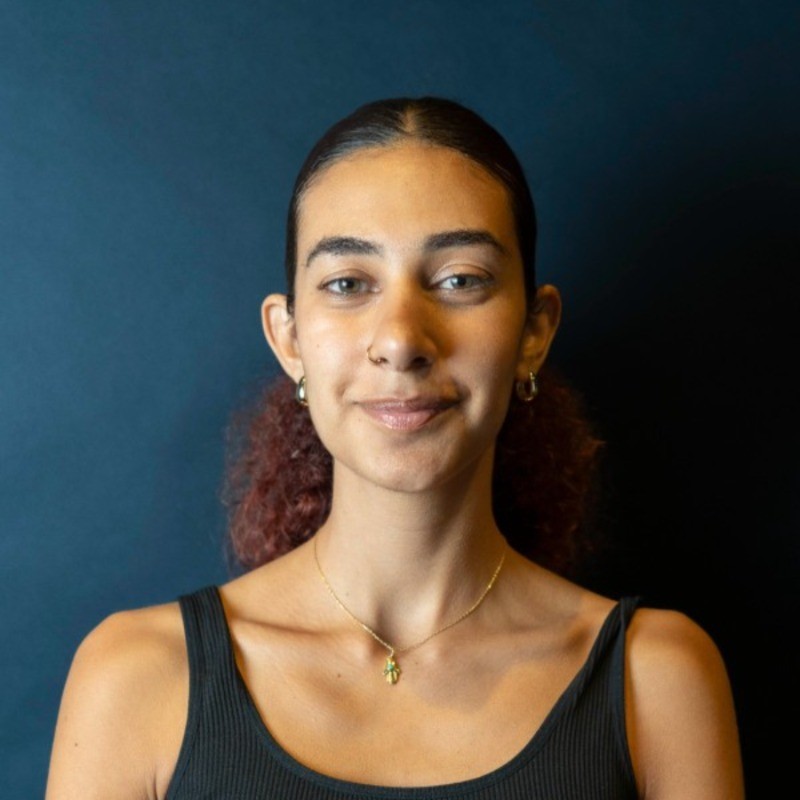
Laila Gamaleldin
Founder · Silver Surf
About Silver Surf
On the pod: software to help small-business owners sell faster and at better valuations. It has since pivoted to AI occupancy optimization for skilled nursing.
The insights
10,000 Boomers retire every day — and 80% of their businesses never sell. The write-up pulls out the big idea, the numbers, the counterargument and what it means for the autonomous future.
Transcript
Auto-generated from the episode audio and lightly cleaned up, so expect the odd misheard word. Each timestamp opens that moment on YouTube.
Read the full transcript 5,815 words
0:00 All right. So, Laila, welcome to the Tesla Pod, right? So you spend your time, right, helping people who's built their businesses for over 30 years time, right? And this car is like now driving itself. Where do you think America stands? What's a better reflection? Is it your customer or this whole self-driving technology that we see in SF? Yeah, definitely. There's this quote that I really love. It says like the future is here. It's just not evenly distributed. And I think in SF we are living in a reality that is not necessarily the same one as in other places in the US. So I would say my customers are really the true reflection of where America is at right now. And I'm really trying to bridge those two gaps and bring the future to places it hasn't quite reached yet.
0:45 Yeah. Because I mean it's a very interesting problem that you're working on, right? I mean when I first heard about it as well, I mean I it was very intriguing, right? So for ones who don't really know about Silver Surf, why don't you give like a 30 seconds intro? Yeah, definitely. So Silver Surf is a an AI native brokerage for selling small businesses, we help small business owners who've been running their companies for 30, 40, however many years sell their company exit and get a good price and we use AI to get them the best possible outcome in that. Right. Right. So whose face do you see like you know early in the morning when you wake up, right? What drives you to like you know build this thing? Yeah, definitely. So, a lot of the impetus behind like even getting started in this was my own parents. They were small business owners for their entire careers. and just watching them and their exit, luckily they had a great one, but just seeing how little infrastructure was in place got me really wanting to work in this domain and build out more infrastructure that I wish they had when they were exiting.
1:44 Right. Right. Right. I see. And then I mean you have a pretty interesting story, right? So, you worked at Google, you were at TikTok before, right? So these are like amazing comp packages that you know everyone really but you decided to leave all of that right I mean even when you leave right usually what's happening in SF is you would start an AI native startup probably right so what really made you want to I mean yes your parents perspective that's great right but but why this problem why do you think that this is really big I think two things like the scale of the problem and then also the amount of attention that it's getting. So, as far as the scale, we're on the verge of what is called like the largest wealth transfer in history. There's never been this amount of small business owners all retiring in one go. And when I learned about the success rate of actually being able to sell, I was just amazed at like how low it is. It's about 30% right now, right?
2:40 And at the same time, I was seeing AI 30% of the businesses only sell or Yeah. are able to successfully sell. 70% end up closing down. So thinking about the scale and the impact that's going to have on our economy, I think was really compelling to me. And at the same time, I'm watching AI make all these evolutions and these leaps and bounds, but no one's really applying it to this domain yet. And it feels like the people around me aren't paying attention to it. So the combination of those two things, it just felt like the largest and most exciting thing I could be working on. Well, I mean this is very interesting, right? Because like if you think about it, right? So then I mean someone's build the these businesses, right? So for all their lives right so then and these like you know they are they their baby right so then and most of the time the problem is like probably their children don't really want to take these up right and I think that's a main problem right and then I was like somewhat diving into silver tsunami as well and I don't think a lot of people have heard about it also right so why don't you enlighten us on that yeah definitely so the silver tsunami is this concept that over the next 10 years 3 million baby boomers who own businesses are going to need to exit their businesses somehow. And currently the success rate of that is one in three. But the issue is that put together these companies are worth about $6 trillion, right?
3:56 So you're talking about like $4 trillion of market cap that can just be wiped out overnight if we don't start acting now. and yeah, I think it's perhaps one of the most overlooked problems that the US is currently facing at this moment. Right. What are the problems right now? I mean why can't they like I mean these are I mean you look at most of these AI native startups here right some of them they don't have revenue even right so but they've raised like you know millions of dollars right so but these are businesses that have that have a very good foundation right and have been built over time they are they are like you know superstars in their local communities right so what is stopping them from actually selling these businesses yeah definitely. So, right now, as a small business owner, you're kind of between a rock and a hard place.
4:46 You're either going to go to what's called like a business broker. And they're going to help you sell your business, and they'll probably get you a pretty good deal, but they'll also take 10% of your company's value, which is quite a lot for someone who's been working for like, you know, 40ome plus years for a person to take 10% of everything they've ever built. And then the other option that 80% of owners do because they're scared off by the 10% fee is they'll try and DIY their sale themselves. So they'll come in with no M&A experience and then they'll try and sell their company. And usually what that means, it means they're posting it on Craigslist. It means they're just kind of like sharing their financials with strangers and a lot of times getting ripped off in the process of that. So there's really two options right now and neither of them is serving owners very well. So that's why I'm trying to build like a third path that gets the both of best of both worlds and offers it to small business owners.
5:34 Right. Right. Right. So I mean one of the things that you're speaking about is ESOPS right? So that I mean is that the main approach that you're suggesting or I mean why don't you en enlighten us on the approach that you're really taking on this? Yeah, definitely. So ESOPs are short for employee stock ownership plans and essentially they're a way for a business owner to sell the company to its own 6 minutes employees. And that was really the entry point that got me into this whole world of things. I just got really obsessed with ESOPs and started learning more about the broader space. but one thing I found with them is like it's already a big challenge to be approaching a business owner and talking to them about their exit and it's another one to start introducing them to a new kind of exit that they've never heard about before. So, I've sort of pivoted away from ESOPS for now at least and more focused on like traditional sales. And really the service that I give owners is a few things. So, it's helping them like clean up their financials and clarify like how much they're actually making. Another one is just doing their marketing materials and getting all the value of their business like onto paper. And then finally, it's like taking them out to market and like marketing them in a way that gets them the best possible outcome and best possible deal for their business.
6:48 Right? Is this done in the form of a service or is this a platform or I mean say that I own a laundromat here, right? And I bu this approach, right? Is it a portal that I get into, right? And then start working or is it like a service that I sign up with you? How does it work? Yeah. So, we call ourselves an AI native services company. So, on the front end, it looks like a services company. We're working one-on-one with the business owners. But anything that is not like the face tof face interaction with the business owner, all our back office operations, we've entirely automated with AI. And so that lets us provide that personalized approach to our clients while still maintaining margins that are a lot better than a traditional services firm. And the reason why we do this approach is because selling your business is such a deeply emotional thing. And we think that if you simply just give the tool directly to the owner and you just like give it to them to use themselves that is a lot less compelling than like this also selling on top of that the emotional assurance of having a professional in the loop as well.
7:55 Got it. Right. Right. So now what would the approach be? Right. So then now when I'm selling right so you like you know you would first do an audit and then progress forward. Right. So what is I mean like because this AI native agencies or AI native services right that's actually an upcoming space which I've seen quite a lot right so how does the exact process look like right and then at the same time like you know how does this like you know differ from like a traditional sort of services organization yeah definitely so as compared to a traditional services firm we can take on a lot more clients in one go because we can parallelize and automate a lot of the work that needs to be done so take for example, making the marketing materials. Usually, it puts together what's called like an information memo for the business. And this is going to be like a 20 30 page document that you're writing on behalf of the owner.
8:52 And for a traditional broker, they're going to be sitting down doing that by hand. It's going to take them a couple weeks to really like get it done as opposed to us where we can do it in a matter of like an hour or so. And so 9 minutes like those time savings going from like a few weeks to like an hour in the amount of time that it takes us to produce our outputs that lets us take on a lot more clients in one go while still giving them the highest quality output that we can. Right. Right. Got it. So we are just passing founders inc right. We are we had a very good program right and I mean the learnings that we got there was like you know pretty awesome right. So definitely from founders inc like you know where we had the first chat to now right? it's been a couple of months right? So what has evolved now?
9:31 Yeah, definitely. I think my thinking on the space has evolved quite a bit. When I first entered Founders, Inc. I knew I wanted to do something in this sort of business succession space, but I had no real like angle into what exactly it is. And I think the evolution has really been going just from like initial customer interviews to having a couple hypotheses to testing them out to like now actually being able like to work with actual sellers and like get their first deals out, right? And yeah, so right now I'm starting to marketing my first few like sellers and that's been like a huge evolution from a few months ago where I was just calling people up all day to figure out like what their biggest pain points were. Right. Right. Right. So that's great. So I mean shifting gears a bit. Right. So then now you're originally from Egypt, right? Cairo. Right. So from Cairo to moving to here, right? So it's and then like you know from Google to TikTok, right? I mean quite a journey, right? Why don't you enlighten us on this whole journey like you know how it has been the migrations right so then moving to big tech right so how has this whole journey been like yeah definitely it's honestly been just the ride of a lifetime so I studied computer science at Brown University and really the whole impetus of like coming to the US for me was like I have always been someone who wants to work on the biggest problems on the biggest possible stage and so I went to Brown to study initially international development studies and the idea was to go home and to really just help with the economy and
10:53 Like figure everything out there. but I pretty quickly realized that without having a tangible skill set, the amount of impact that I can have gets limited very quickly. And so I put it into computer science because I knew that through software, I could really scale up the impact of whatever work it is that I want to do. And that was the same logic behind going to Google and going to TikTok. If I'm going to be building software, then I want to do it on the biggest possible stage and learn what that means to do that. and yeah, now that I've done that, I want to also learn what it means to start something from scratch and like grow something as opposed to come in like mid show and like things are already like have been already scaled up. So that's I really see that as being the next journey in my career and what I'm doing with Silver Surf right now. Right. Right. So a lot of this is also stemming from your personal experience that your parents were building a small business, right? And then they had a successful exit, right? So and like why don't you walk us through like that that journey like you know how it has been like what sort of challenges that you saw when that was happening right but it has been successful also right so maybe like you know take us through that journey definitely yeah so theirs was definitely like as smooth as things can go they were not even going to market they got approached by someone who wanted to expand into the Middle East right and saw like their company as a good opportunity to be a starting point in
12:14 The region but even within that, like there was a lot of due diligence and a lot of like back and forth. So even though someone approached them and they were interested, just getting the company to a place where they could explain it to someone and getting it like ready to be sold still, you know, took a while and there was like some back and forth, some question marks, but that's the best case. A lot of their peer group had to like actively go to market as opposed to being approached by a buyer. And for them, it ended up a lot of times being like multiple years to really get like everything in order and be able to like find the right people who would be interested in all of that. And like some of them were successful, others weren't. So I've seen it a lot of times where people like build out their life you know, their life's work and they build out a huge company and then they're forced to shut it down at the end. So that's really what Silver Surf is trying to address is making sure that the outcome gets more and more rare for business owners.
13:05 Right. Right. Right. I see. So through this journey I mean you seeing this firsthand right? So like I mean now you have a couple of tools right that you are giving for these businesses right what I mean like you know one thing is this valuation tool right so there's another one called CIM generator right so why don't you take us through like you know what these particular tools are and how these would really help yeah so we have a series of tools they're really all geared around getting the business as legible as possible before it goes to market because from doing a lot of research The issue isn't so much like a lack of buyers or a lack of places to market yourself. It's more so that a lot of times business owners will come to market not having done the prep work that it takes to make their business sellable. So everything that I do is based around that. So there's a few tools that actually make help make the business sellable, make it easy to understand as a potential buyer. So the first like you mentioned is the valuation. Yeah. So a lot of times business owners are going to be very emotionally attached to their business and therefore come and they don't know what value it is as well.
14:10 Exactly. So they're pricing it based about how they feel about their business rather than like what the market actually will pay for this kind of business. So the valuation tool does two things. It actually gives you like the number or like the range that you can be working within. But it gives you market comparables to help you like anchor yourself not in emotions but rather in data. And then once we've done that, we're all happy about like the general price range that we're aiming for. Next we go to the info memo generator, right? And that's essentially telling the story of your business. So not just from the financials but also from its community impact, from its customer concentration, what it means to own this business. Really just making it a compelling opportunity to a potential buyer.
14:50 The next piece that we do is getting the business's informal knowledge down. So another big deal killer is owner dependency. The owner will be running the business for 30, 40 years. is they know everything about it. They've never written anything down in their lives. And so people are worried that when they buy this business and the owner leaves, all the knowledge about how to run it also leaves with them. So we have a process where we get all of the owner's knowledge down onto paper. We even sometimes make an LLM twin of the owner. So you still have them at your disposal when they leave the business, right? And then finally, once we've done all that leg work, it's time to get you out in front of people. So whereas a traditional broker would usually just post you on a few websites and sit and wait for inbound to come, we're a lot more proactive in our approach where we'll scrape like over a thousand people who we think could make sense as buyers for you and we'll do mass outbound to them so that we get you a bunch of competing offers and are able to drive up the price and get you the best possible deal that we can.
15:43 Right. Right. Right. And buyer finder is another thing. Right. So is it like more like a matchmaking process? Right. So how do you how do you match it? Right. Do you use AI there or like what's the process on that front? Yeah, definitely. So, it's both AI and both also just domain expertise. So, the part that we set up initially is just knowing B for different kinds of businesses what are both the obvious and the nonobvious people who might be interested in buying this kind of business. And then once we as people with experience in M&A have all like put this knowledge together, now the AI steps in where it takes in the business. It takes in the types of buyers that we've taught it would be interested in this kind of business and then it does the leg work of actually going out and like gathering like a thousand 100,000 like,00 potential buyers and then writing the kind of messaging that it thinks would be most compelling to that person.
16:39 And then it's selfarning, right? So like the more that we do this, the more data we have about like who tends to respond, who doesn't tend to respond, what kind of messaging they respond to, and we're able to get more and more sharp in our outbound with every sale that we do from now on. Right. Right. And you have your model, I mean, you're not only directly working with buyers, right? You also 17 minutes work with brokers, right? Sort of u it could be like, you know, CPAs or exit planners, attorneys, right? So then the these different kinds of brokers, right? So how does it work right? So then is it easier to work when you're working with brokers is that easier or is like is it easier to for you to like when you're actually working with direct sellers?
17:21 Definitely. Yeah. So I initially when I started was trying to sell tooling to brokers and ended up pivoting away and more so to like you're saying directly to sellers for a few reasons. I think in traditional brokerages because so much of the work is manual, each individual broker ends up only doing a few deals per year. And so when you're talking to a broker and you're trying to sell them software, they're working from that mindset of like, oh, I do three deals in a year. I don't know if it makes sense for me to buy, you know, software to just facilitate the three deals I do in a year. And they don't always necessarily see the value prop of like, oh, this is going to unlock actually being able to do way more than three deals in a year, right? and then also just thinking about the TAM, right? like the town of like selling software to brokers versus the town of like selling companies period ended up making me pivot away from like selling tooling to brokers and more so to actually opening my own brokerage.
18:10 But I do still work a lot with you act like you act as a brokerage basically. Yeah, exactly. So we're opening our own brokerage and yeah, I do still work a lot with like CPAs and lawyers and like the non-broker people in the picture because they're a very valuable like referral channel. a big thing with being able to work with a seller is approaching them through people that they already trust. And so the CPAs, the lawyers and all that, they already have the seller's trust and they already know that the seller is ready to take on this step. so I've been working a lot with them as sort more so like referral partners as allies rather than like doing the work itself. Right. Right. Right. So u some rapid fire questions. Right. So what's the hottest take on SMB software space right now? Yeah. Too many people approach I think the SMB software space from an intellectual place as opposed to like a lived experience place and then they try and replicate what works in enterprise to SMB when it's really like two completely different playbooks.
19:05 So I think I see that being a very common stumbling block of people who are building for SMB for the first time. Right. Right. What's the most overrated thing in tech right now and what's the most underrated thing? I think the most overrated thing in tech right now is this idea that the frontier labs are going to eat every single company and that there is no moat left given how anthropic is shipping everything all the time. I think what actually on the inverse of that was super underrated is like domain expertise and being able to leverage both the frontier models and also your domain knowledge about a specific space and bring those together to bring something more vertical and more niche that a frontier company wouldn't actually get into. I think that's the most underrated play in tech right now.
19:48 Right. So, one of the fights that you are in is it ESOPS versus PE? Is that the fight that kind of you're in? yeah, it's definitely part of the question, right, is like who do these businesses actually get sold to at the end of the day, right? I definitely see a lot of pros for both. I would say I lean a little bit more ESOP just because I appreciate the way in which it financially empowers the employees of the company because I see it all the time where employees have been at a company for a really long time and they have the knowledge to run the company but not necessarily the capital and I think ESOB is a really good solution for that. But PE is a lot more scalable and it gives a lot of owners exits. So there's definitely a time and place for each of them depending on the situation, right? if there's someone like right now who's in Google or TikTok, right, who's considering to leave, right?
20:38 What is that one thing that you would say to them, right, that like you know they would you wouldn't have been able to tell if you were there? Yeah, I'd say just take the leap. M I think I spent a lot of time sort of like daydreaming and feeling like I had to figure everything out exactly perfectly like before I could quit my job. and so I came into company building with a lot of assumptions about exactly what I need to build based on just doing a lot of online research. And very quickly all of that was like kind of thrown out the window and I started actually talking to people actually getting out there. Right. so I think yeah like you can only do so much like thinking before you actually go do it and all the learning you need to do, you're going to learn like as you execute. Right. Right. Right. Right. So now I mean I want to hear your thoughts about the space that we are building as well right. So that now main direction like you know what we are driving forward is like we build personas around different products right now I mean now you told right I mean these businesses business owners specifically right who's been running this business for 30 years time sometimes they might not even have used QuickBooks for an example right and the way how oh I mean they could have right but then also like you know the way how they would operate software is completely different of how we are using software here in San Francisco right a lot of pen and paper involved Exactly right. So now one of the areas
22:00 22 minutes like know that I would like to pick your brain is right. Then what we are doing is we build personas around different types of people that's actually using these software right then we now especially like you know with AI you can build so much so features right you can build a product just within a day right but would this product really make sense in the perspective of real users or you ship out a new feature right would this feature really make sense to my actual users right so this one of the questions that we ask right and then before you actually really put the product out there can you simulate these different types of personas right and then really see if this product makes sense all together or this feature makes sense all together right so that's kind of the direction what we are building towards with this persona based simulation approach right but I'm curious to understand from your world right how this might be relevant it's definitely super relevant because initially we were planning on actually launching two things in one go we're planning on launching the brokerage which is very like handheld and we're also planning to launch like a self-s serve platform but then I think a big issue that we ran into with the self-s served platform is exactly what you're talking about like a lot of these older people that we work with not necessarily being the most like comfortable with learning a new interface learning a new UI and that was
23:20 Part of like why we ended up going the like route where we're sort of the human interface to it and we're operating our own tools right but in the future we would really love to do like a self-s served platform and I think something like what you're building at market tricks would be super relevant to make sure that we're what we're putting out there is actually usable and useful and like understandable to the demographic that we're working with, right? That's awesome. So, I'd love to give you a quick 2 minutes demo, right? So, then probably the first self-driving demo that's been done, right? So, then I'll give you a very brief demo and then I'd love to hear your top of your mind feedback. Right. That sounds good. So basically what we are doing with marketing I mean like you know you add the credentials to your application right and then it could be the staging environment or the production environment and after you add that in you bring your initial knowledge base about the product right so that could be the context in terms of the existing documentation that you have or the walkthrough videos right and then of course like you know we run like a web scrape search and then we get to know about your product as well right on top of it you could connect your existing data sources, right? So that's a post or hot jar, right? So then we first of all understand what your real users are doing within the application, right?
24:34 Then it's that understanding that we use combined with the simulated user understanding that we use to build these personas around the product, right? So for an example like you know it could be pipeline driven VP Victor, right? So what would what is the personality of that particular persona, right? and like you know what's the behavioral DNA of that particular persona right what's the persona profile right what are the key features of that persona right so we build this profile of the different types of personas of the product right then that is what we use to run these simulations right so you could like you know bind a particular persona and then ask that particular persona to actually use your product right and then provide you with insight sites, right? So, how a single simulation would work is like know we get that particular person and then we spin up a virtual browser and basically like you know that person would be using the application in a step-by-step manner right got it while we do all of that we map out the complete progress right and then also like you know we build a comprehensive this comprehensive mind map of the product right sure so that's what we use right basically
25:51 To run all these QA flows, right? To actually understand if these particular features or product works in the perspective of your real users, right? Or of course to run these user studies, right? Excellent. so that's the overall direction like you know what we are building in but I'd love to hear your thoughts how this would be relevant right within your space. Definitely. I think it's really easy to think about like sellers as a monolith and like you know they all have one mindset and they all want the same thing. But actually from working with sellers like there's so many subpersonas of sellers and so many different things that sellers will be optimizing for. So I think even with what we were talking about like the building a self-s serve platform. I think being able to spin up market tricks and try out try it out from the perspective of a lot of different personas to see how what resonates, what doesn't, what to switch around and be able to like do those tests before we go to market as opposed to like on the fly with clients and losing clients because we haven't met their needs. I think market tricks would be a huge unlock in that regard.
26:53 Right. Right. Right. Thank you. So the last question right so there's a 70 year old somewhere in America right that has built a business over say 40 years time right and then is like you know they want to retire right but they can't really find the exact buyer what would you want them to know yeah I would want them to know that really your sale all comes down to the preparation that you do before going to market and that now with silver surf we're starting to unlock ways to be able to access that affordably. Yeah. And so yeah, I'd love for them to come and work with us and so we can help them get the best possible deal by doing all the leg work that it takes to present yourself to a buyer in the best possible light.
27:33 All right, that's awesome. So where can people find you and Silver Surf? Yeah, so we're at we're at silversurf.co. you can also find us on LinkedIn, just Silver Surf. And I'm on Twitter as well, Laila Silver Surf. All right, thanks a lot. Really appreciate it.